It’s not the load that breaks you down, it’s the way you carry it!!”
Lou Holtz
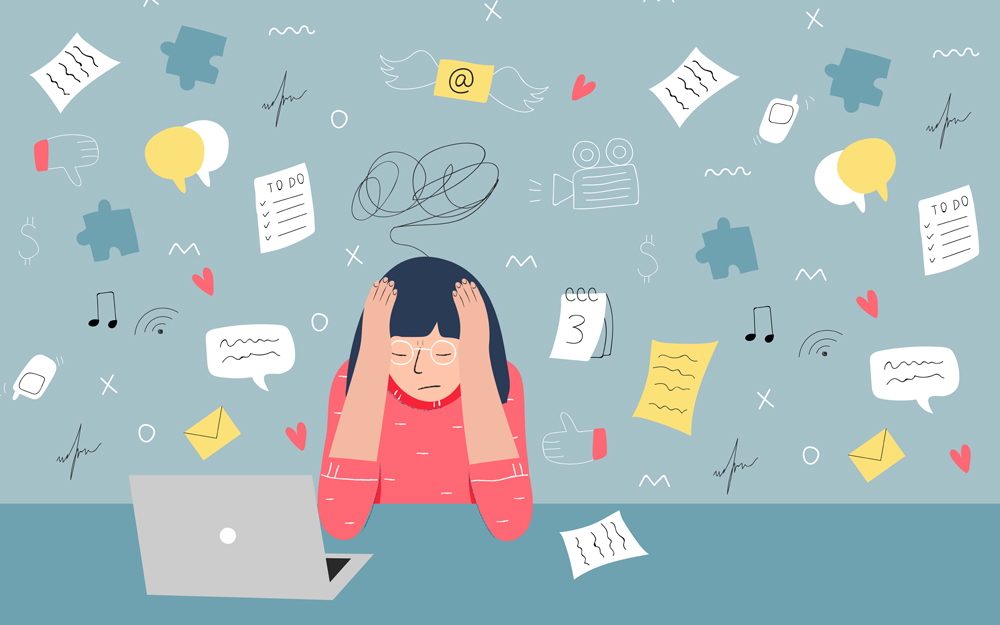
Earlier, stress used to be a very peculiar term and was used only in case someone was facing a really critical problem which has impacted that person either physically, emotionally or socially. But now a days, we use this term so loosely that we just keep chanting “I’m stressed!” like a mantra. Now, what exactly does the word stress mean? It basically is our body’s response to any demand which is challenging or threatening. Hans Selye, who is known as the ‘father of stress research’, states that when we do not get any specific response to the stimulus that creates tension in our body and mind, that situation is called as stress.
The factors that cause stress are known as stressors. Some stressors can be relatively small and can be managed easily whereas others are serious and are difficult to deal with. The stressors can be of four kinds namely physical or physiological, psychological, environmental, and socio – cultural. But the severity of stress a person experiences depends not only on the type of stressor but also on the tolerance level of that person. As in, a failure in the exam may stress out one student so much that it may shake his confidence and he may give up, but this failure may also on the other hand inspire some other student to study hard to get successful in the same exam next time. Thus, the tolerance level of the individual is also important.
In simple words, when the situational demand surpasses an individual’s abilities and available resources, he faces stress. Coping is the response given by the individual to the stress he/she is facing. This coping can be positive or negative. Positive coping involves adaptive behaviors which help us to deal with the stress either by changing the stressful situation or by upgrading our capabilities to deal with it. Negative coping on the other hand, involves maladaptive ways of dealing with the stress. Now that we know, we need to develop positive coping mechanisms to deal with the stress, we will discuss the two important types of coping mechanisms.
- Problem focused coping: This involves addressing the problem itself, that is removing the cause of the stress. To do that we need to know the problem first i.e. we can identify the specific situations that are stressful for us so that we can work on devising the solution for those situations. For eg., if being in an unhealthy relationship is causing stress to you, detaching yourself from the person at first and then ultimately moving out of that relationship would be the best solution to cope with that stress. Similarly, if a student is stressed about an upcoming exam, he can deal with it by working hard for better preparation.
- Emotion focused coping: As the name suggests, this involves dealing with the emotions arising out of a stressful situation when either you don’t want to change the situation, or it is out of your control. For eg., if you are in a stressful job but you don’t want to go for a job switch right now, you need to work on managing your emotions by some stress relieving techniques. Also, when someone is grieving the loss of a loved one, it is necessary to take care of their feelings in a healthy way as here the situation cannot be changed.
Choosing the right coping skill mostly depends on the situation you have to deal with and your need at that moment. Whichever coping skill you choose, it should help to calm you in stressful situation without denial or avoidance of the situation.
It should also be noted that just because a strategy is helping you to deal with the stress, it can’t be positive always. Some coping mechanisms such as addictions, blaming self or others, avoiding the situation, isolation, etc. may provide temporary relief but they tend to make things worse in the long run. Therefore, we need to devise our own coping skills to deal with the stress depending on our personality, tolerance, abilities, etc. It’s like making your customized recipe out of the given ingredients, isn’t it??
Lastly, stress is not always negative, it’s like salt and pepper of life. In fact, some stress is actually considered “good stress.” Such stress known as “eustress” is the type of stress we might feel before an important competition or on your marriage day. This positive stress can make our life lively, energetic, varied and dynamic! So, enjoy this positive stress in your life and brace yourself to deal with the stressful situations in your life positively!!
Afterall,
“Stress acts as an accelerator: it will push you either forward or backward, but you choose which direction.”
―Chelsea Erieau

 Mind Matters!!