
“What we learn with pleasure, we never forget!!”
Exams have always been treated as war zones in the Indian households, let alone the 10th and 12th board exams, even the school term exams make not just the kids, but the parents too lose their sleep. Watching our kids succeed in academics is always delightful for parents but do the scores on their grade cards truly do the justice to their capabilities?? There is a room for doubt. Because high grades neither always mirror the child’s genuine interest in the subject nor are they measure of conceptual understanding. Similarly, low grades don’t define someone’s entire life picture. What truly matters is the learnability of our children, so we need to put in the efforts to nurture this skill in them.
Of course, getting good scores on the grade card is a prerequisite for getting into good professional institutes which are considered to be a gateway to lucrative careers. I’m not denying that, but this is at the later stage of schooling and in competitive exams. I am referring to the early school years which are formative years where we can definitely try to cultivate learnability in kids instead of running behind perfect grades.
Learnability is the degree to which a skill, concept, or body of knowledge can be successfully acquired by a student through instruction, experience, or study. So, what it has to do with early childhood education? As we all know, early childhood is a period of rapid development. The brain is ready to acquire and process new information and rewire its neural connections to adapt to new experiences and learning. So, the goal of education during this period should not just be teaching letters, numbers or facts and rely on the rote memorization but to help the children explore the environment through experiences, try out different things, learn from their mistakes and apply whatever they have learnt to real life situations. We don’t want children to just mug up things, write them on exam paper, get grades and then forget about it. Learnability helps the children in different ways as mentioned below:
- Promotes curiosity: If the children are genuinely curious, they become active participants in learning rather than being just passive recipients of information. When they explore things and ask questions, they learn naturally.
- Cultivates problem solving skills: The children who are self-learners try to think on their own, find age-appropriate solutions to the problems and make choices when given a chance.
- Strengthens confidence: Learning things on their own even if they are as small as communicating an idea, folding clothes differently builds a sense of competence in the kids which ultimately strengthens their confidence.
- Encourages adaptability: Children mostly have to encounter new environments like new friends, teachers or different routines and social situations. Learnability helps them to adjust and get acquainted with such unfamiliar situations as they can have curious approach towards new experiences.
- Builds persistence: In situations where they are unable to do tasks, children learn to understand that there are many ways to complete a task or do a thing and failing in one doesn’t imply complete failure. You can find out newer ways to go ahead.
- Creates lifelong learning attitude: A child who actually knows how to learn and is curious about things is definitely better equipped to face personal, academic, professional and social challenges.
To foster learnability in kids, we can try to do some of the things mentioned below:
- Encouraging curiosity: As discussed already, curiosity is the driving force behind learning. Try to encourage kids not just to ask questions but also to look for age-appropriate answers instead of giving ready-made solutions. Asking open ended questions like “What do you think?” encourages them to think independently.
- Let them do mistakes: Mistakes are the best opportunities to learn. Avoid the urge of correcting every small error. Instead say,” It doesn’t seem to work out this way, how can we try to do this differently?”
- Give problem-solving opportunities: Children learn by solving small day to day problems on their own. We can encourage them to do simple tasks like arranging toys, solving a puzzle, packing their school bags, etc. We can thus gradually build independence in them by allowing them to do simple things themselves rather than doing things for them. They may seem to struggle in the beginning, but this struggle can build confidence.
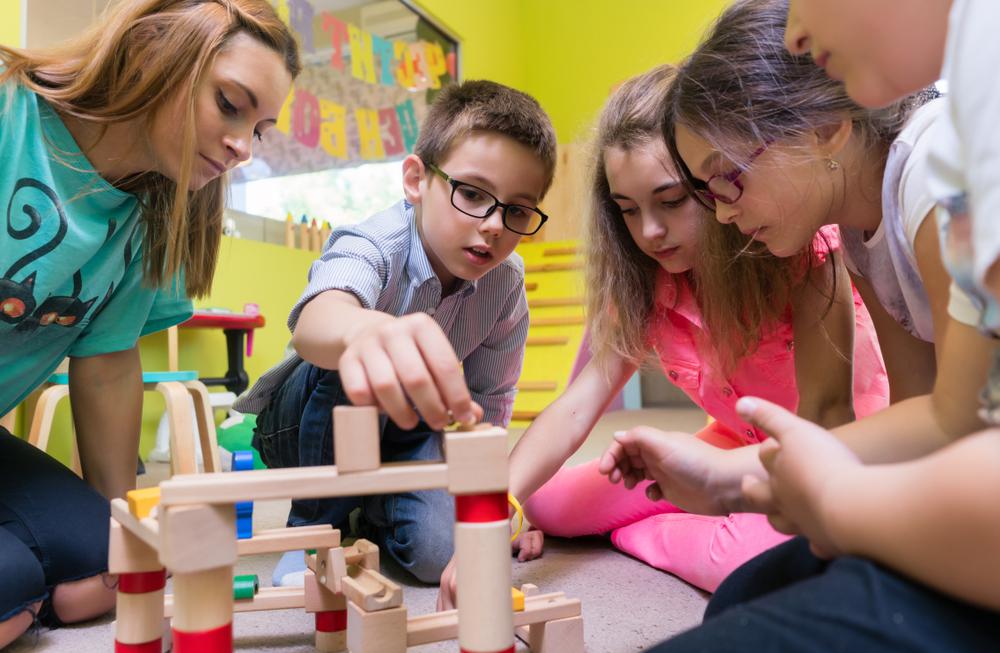
- Facilitate playful learning: Learning should not be a “typical” affair for small children. They learn better if they enjoy the process. Storytelling, drawing, puzzles, blocks, singing, small experiments, games, nature walks can all be different ways of learning.
- Give exposure to new experiences: Experiential learning is very effective. Introduce kids to newer experiences like new places, activities, books, foods as well as new people at a slower pace.
- Model learnability: Children are great imitators. They observe the adults closely and try to follow them. We can be role models for them by learning something new ourselves, making mistakes and trying again.
The goal of education is not to raise children who know all the answers, but who believe that they can learn even if they don’t know yet. We, as parents can definitely be the facilitators to make the journey of knowledge and wisdom more enjoyable and long-lasting for our children.
What would you try out with your kids then? Comment below.
“Curiosity is the beginning of all wisdom!!”


Leave a comment